Including Third party dependencies inside Kibana Plugin?


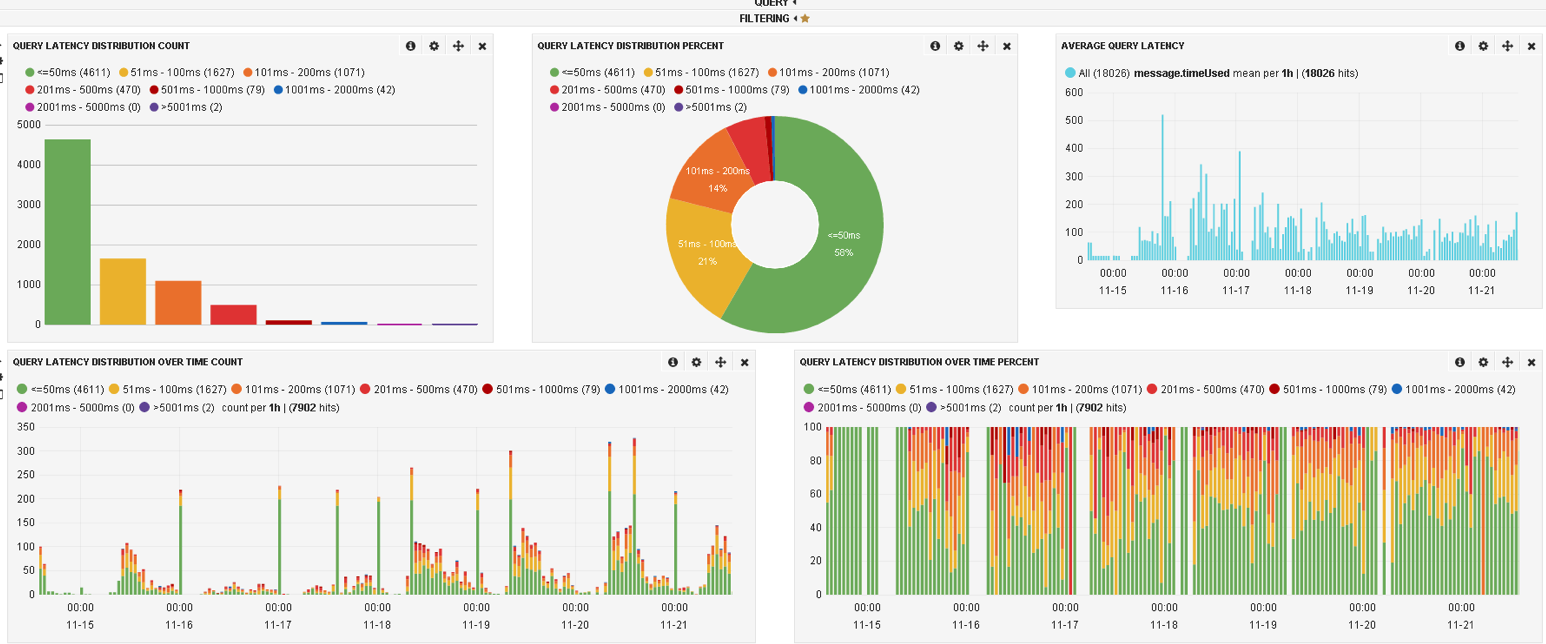
To make AJAX call from Kibana Visualization to external web service.
 $.ajax({
     type: "GET",
     url: 'http://localhost/es',
     headers: {'Content-Type':'application/x-www-form-urlencoded'},
     success: function(my_result) {
          console.log(my_result);
     },
     error: function() {
          alert("error1");
     },
});
There are two separate headers that are necessary here: access-control-allow-origin and access-control-allow-headers. You’re currently setting access-control-allow-origin but I don’t see anywhere you’re setting access-control-allow-headers.
#   _____ ____  ____  ____  _____   ____  ____  _      _      _     ____  ____  ____
#  /    //  _ \/  __\/   _\/  __/  /  _ \/  _ \/ \  /|/ \  /|/ \   /  _ \/  _ \/  _ \
#  |  __\| / \||  \/||  /  |  \    | | \|| / \|| |  ||| |\ ||| |   | / \|| / \|| | \|
#  | |   | \_/||    /|  \_ |  /_   | |_/|| \_/|| |/\||| | \||| |_/\| \_/|| |-||| |_/|
#  \_/   \____/\_/\_\\____/\____\  \____/\____/\_/  \|\_/  \|\____/\____/\_/ \|\____/
#
Warning – Be careful with this script i have modified this just for me but you can use it anyways.
 'pass_protected/myfile_02.zip',
	'2_docs' => 'pass_protected/myfile_32.zip',
	'2_js' => 'pass_protected/my_docs.zip'
);


$file_name = $_GET['file'];
$file_name = isset($zip_files[$file_name]) ? $zip_files[$file_name] : null;
$file_name = $file_name ? Config::ABS_PATH . $file_name : null;

if (!$file_name) {
	exit();
}


// make sure it's a file before doing anything!
if(file_exists($file_name)) {

	/*
		Do any processing you'd like here:
		1.  Increment a counter
		2.  Do something with the DB
		3.  Check user permissions
		4.  Anything you want!
	*/


	// required for IE
	if(ini_get('zlib.output_compression')) { ini_set('zlib.output_compression', 'Off');	}

	// get the file mime type using the file extension
	switch(strtolower(substr(strrchr($file_name, '.'), 1))) {
		//case 'pdf': $mime = 'application/pdf'; break;
		case 'zip': $mime = 'application/zip'; break;
		//case 'jpeg':
		case 'jpg': $mime = 'image/jpg'; break;
		default: $mime = 'application/force-download';
	}
	header('Pragma: public'); 	// required
	header('Expires: 0');		// no cache
	header('Cache-Control: must-revalidate, post-check=0, pre-check=0');
	header('Last-Modified: '.gmdate ('D, d M Y H:i:s', filemtime ($file_name)).' GMT');
	header('Cache-Control: private',false);
	header('Content-Type: '.$mime);
	header('Content-Disposition: attachment; filename="'.basename($file_name).'"');
	header('Content-Transfer-Encoding: binary');
	header('Content-Length: '.filesize($file_name));	// provide file size
	header('Connection: close');
	readfile($file_name);		// push it out
	exit();

}

?>
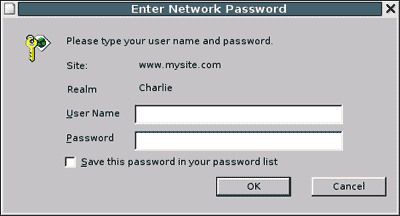

You can secure any file using this script.
It will not allow you to access without username and password.
1st step is to create .htaccess file in a folder which you want to protected.
2nd step is add index.php as shown in example. This will not work as it is but you can modify.
/*******************************************************/


.htaccess file

/********************************************************/

Options -Indexes

RewriteEngine On

RewriteCond $0 !^(favicon\.ico|favicon\.png|media|robots\.txt|crossdomain\.xml|css|js)

RewriteRule .* index.php?file=$0 [QSA,L] # pass everything thru php

I want my videos URL to keep hidden from the users while still, they can able to see the video.
It have 2 parts.
1. PHP code and
2. HTML video Code
0||$end<$size)
  header('HTTP/1.0 206 Partial Content');
else
  header('HTTP/1.0 200 OK');

header("Content-Type: video/mp4");
header('Accept-Ranges: bytes');
header('Content-Length:'.($end-$begin));
header("Content-Disposition: inline;");
header("Content-Range: bytes $begin-$end/$size");
header("Content-Transfer-Encoding: binary\n");
header('Connection: close');

$cur=$begin;
fseek($fm,$begin,0);

while(!feof($fm)&&$cur<$end&&(connection_status()==0))
{ print fread($fm,min(1024*16,$end-$cur));
  $cur+=1024*16;
  usleep(1000);
}
die();
?>
(1) Remove previous versions of ElasticSearch:
sudo apt-get --purge autoremove elasticsearch
(2) Remove the ElasticSearch directories:
sudo rm -rf /var/lib/elasticsearch/
sudo rm -rf /etc/elasticsearch
(3) Install ElasticSearch 1.6:
sudo dpkg -i elasticsearch-1.6.0.deb
(4) Start the service:
sudo service elasticsearch start
(5) Test if it works:
sudo service elasticsearch status
curl -XGET "http://localhost:9200/_cluster/health?pretty=true"
curl "localhost:9200/_nodes/settings?pretty=true"
Things you can use to resolve this situation:
sudo apt-get install --reinstall kibana
sudo apt-get remove kibana
sudo apt-get remove kibana
sudo apt-get -f install
sudo apt-get remove --purge kibana
dpkg
sudo dpkg -r --force kibanaThe command du “summarizes disk usage of each FILE, recursively for directories,” e.g.,
du -hs /path/to/directorygit rev-parse --show-toplevelBe sure the folder is really empty (hidden files/folders might be in there). Look at the file contents again with
sudo ls -lha /path/
If you’re absolutely certain that it doesn’t contain anything you want to have (including subdirectories), delete it with
sudo rm -r -f /path/
The -r makes it delete the folder (and subfolders), even if it is non-empty, -f is for force (this might be unnecessary).
/opt/kibana/bin/kibana --version
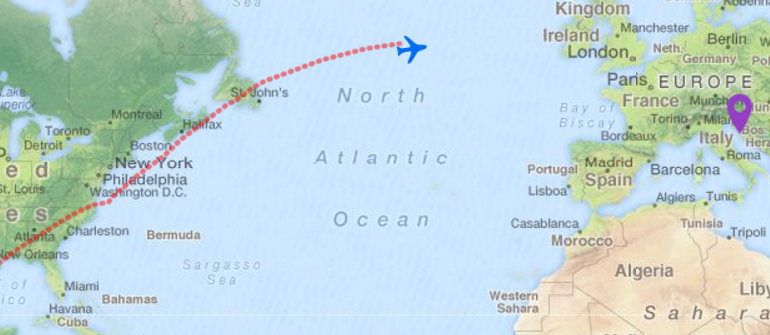
First it is important to know how it works –
L.marker([48.8631169, 2.3708919], {
    rotationAngle: 45
}).addTo(map);
rotationAngle property need a value and this is key. You will have to generate that dynamically based on aircraft position and destination airport. Function below does the same calculate and give rotationAngle.
Function in Python
def computeHeading(lat1, long1, lat2, long2):
    import math

    rlat1 = math.radians(lat1)
    rlat2 = math.radians(lat2)

    dlong = math.radians(long2 - long1)

    y = math.cos(rlat2) * math.sin(dlong)
    x = math.cos(rlat1) * math.sin(rlat2) - math.sin(rlat1) * math.cos(rlat2) * math.cos(dlong)
    heading = round(math.degrees(math.atan2(y, x)) + 360, 4) % 360

    return heading
Keep in mind that lat1 and long1 are the aircraft’s position. And lat2, long2 are airport destination where aircraft is heading.
Function in PHP
function computeHeading($lat1, $long1, $lat2, $long2) // lat1 and long1 are the aircraft's position
{

    $rlat1 = deg2rad($lat1);
    //$rlat2 = radians($lat2);

    //$rlat1 = radians($lat1);
    $rlat2 = deg2rad($lat2);

    $dlong = deg2rad($long2 - $long1);
    //$dlong = radians(long2 - long1);

    $y = cos($rlat2) * sin($dlong);
    $x = cos($rlat1) * sin($rlat2) - sin($rlat1) * cos($rlat2) * cos($dlong);
    $heading = round(degrees(atan2($y, $x)) + 360, 4) % 360;

    return $heading;

}
Function in JavaScript
  function computeHeading(lat1, long1, lat2, long2)
    {

        // Converts from degrees to radians.
        Math.radians = function(degrees) {
            return degrees * Math.PI / 180;
        };

        // Converts from radians to degrees.
        Math.degrees = function(radians) {
            return radians * 180 / Math.PI;
        };


       var rlat1 = Math.radians(lat1);
       var rlat2 = Math.radians(lat2);

       var dlong = Math.radians(long2 - long1);

       var y = Math.cos(rlat2) * Math.sin(dlong);
       var x = Math.cos(rlat1) * Math.sin(rlat2) - Math.sin(rlat1) * Math.cos(rlat2) * Math.cos(dlong);
       var heading = Math.round(Math.degrees(Math.atan2(y, x)) + 360, 4) % 360;

        return heading;

    }
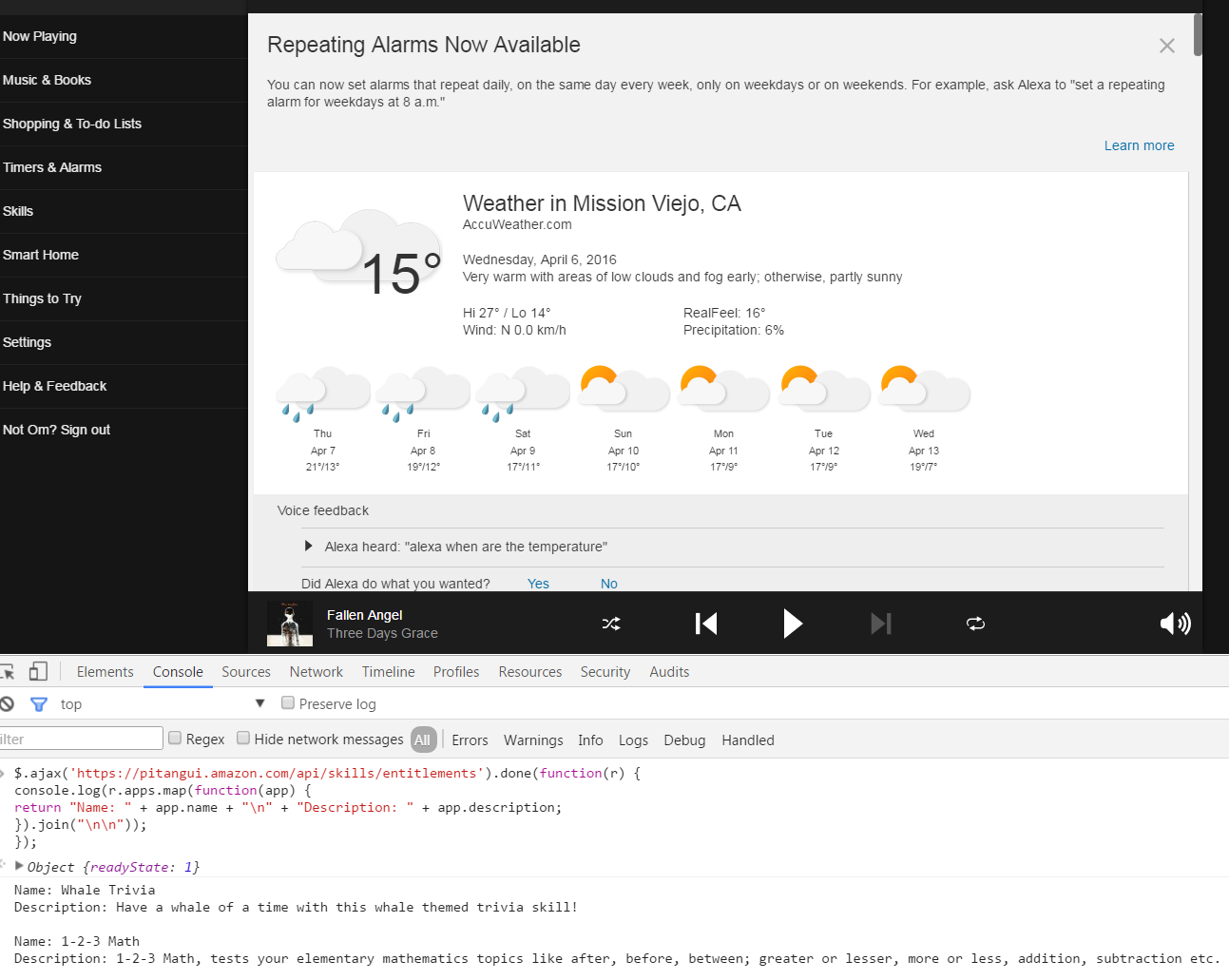
Go to alexa.amazon.com, open up the console, and run
<pre>
$.ajax(‘https://pitangui.amazon.com/api/skills/entitlements’).done(function(r) {
console.log(r.apps.map(function(app) {
return “Name: ” + app.name + “\n” + “Description: ” + app.description;
}).join(“\n\n”));
});
</pre>